Introduction
The digital landscape is evolving faster than ever. From AI-powered search to short-form video dominance, digital marketing in 2025 is not just about visibility—it’s about connection, value, and trust.
Whether you run a local store or manage a global eCommerce brand, digital marketing determines how customers find you, engage with your brand, and decide to buy. This guide will take you through every key element of digital marketing—from fundamentals to future trends—so your business can thrive in the modern digital age.
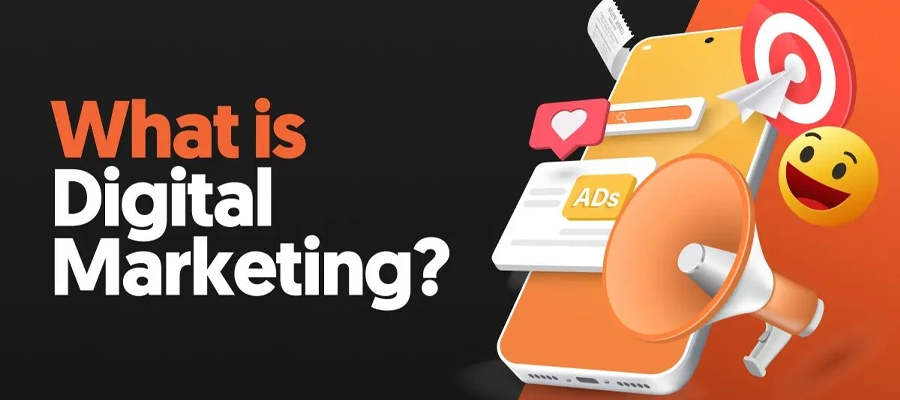
1️⃣ What Is Digital Marketing?
Digital marketing refers to all marketing efforts that use the internet or electronic devices to connect with potential customers. It covers everything from social media and websites to email newsletters and online ads.
Think of it as the bridge between your brand and your audience—built through creativity, strategy, and data.
Examples of digital marketing channels include:
- Search Engine Optimization (SEO)
- Content Marketing
- Social Media Marketing
- Email Marketing
- Pay-Per-Click Advertising (PPC)
- Influencer & Affiliate Marketing
Together, these elements create a powerful system that drives brand awareness, traffic, and sales.
2️⃣ Why Digital Marketing Matters in 2025
1. Consumer Behavior Has Moved Online
People search, shop, and interact digitally. If your brand isn’t visible online, you’re missing the majority of your audience.
2. It’s Cost-Effective and Measurable
Unlike traditional ads (TV, billboards, print), digital campaigns can be tracked in real time. You can monitor engagement, conversions, and ROI with precise data.
3. Global Reach with Local Targeting
Digital marketing allows you to reach anyone, anywhere—and still focus on hyperlocal targeting using location-based tools.
4. Continuous Optimization
Every click tells a story. With analytics, you can learn what works and improve constantly, keeping your strategy efficient and relevant.
3️⃣ The Core Pillars of Digital Marketing
3.1 Search Engine Optimization (SEO)
SEO helps your website rank higher in Google, bringing organic (free) traffic.
Key SEO elements:
- Keyword research (understand what people are searching for)
- On-page optimization (titles, meta tags, headings)
- Technical SEO (speed, mobile-friendliness, sitemap)
- Link building (earning backlinks from reputable sites)
Pro tip: Use tools like Google Search Console or Ahrefs to find keywords and track performance.
3.2 Content Marketing
“Content is king”—and in 2025, context is its crown.
High-quality content builds authority, educates your audience, and fuels SEO.
Best types of content:
- Blog posts and case studies
- Infographics and videos
- E-books and whitepapers
- Podcasts and webinars
Focus on value. Every piece of content should solve a problem, answer a question, or inspire action.
3.3 Social Media Marketing
Social media remains the heartbeat of online engagement. Platforms like Instagram, TikTok, LinkedIn, and YouTube give you direct access to your audience.
Winning social media strategy tips:
- Be consistent with posting and tone.
- Engage through comments and stories.
- Mix entertainment, education, and empathy.
- Track metrics (reach, engagement, CTR).
Example: A digital agency can share before-after campaign results or behind-the-scenes videos to build credibility.
3.4 Email Marketing
Email is the silent powerhouse of digital marketing. It offers unmatched personalization and ROI.
Email marketing essentials:
- Build segmented lists (e.g., new leads, customers, VIPs).
- Send value-driven newsletters (not just sales).
- Use automation for welcome sequences and follow-ups.
- Keep subject lines short and catchy.
Stat: Every $1 spent on email marketing returns an average of $36 in revenue (Data: Campaign Monitor).
3.5 Paid Advertising (PPC)
Want faster results? Paid advertising through Google Ads, Meta Ads, or YouTube Ads can put your message in front of the right audience instantly.
How to make PPC work:
- Start with clear goals (traffic, leads, or sales).
- Target the right demographics and interests.
- Continuously test ad creatives and landing pages.
- Track ROI and adjust budget accordingly.
3.6 Analytics & Data
What gets measured, gets improved.
Use analytics tools like Google Analytics 4 (GA4), Hotjar, or SEMrush to understand visitor behavior.
Track these key metrics:
- Traffic sources (organic, paid, referral, social)
- Bounce rate and time on page
- Conversion rate (form submissions, purchases)
- Customer lifetime value (CLV)
Example: If your bounce rate is high, improve content relevance or page speed.
4️⃣ Step-by-Step Digital Marketing Strategy
Step 1: Set SMART Goals
Define what success means:
- Increase organic traffic by 40%
- Generate 200 new leads per month
- Improve conversion rate to 5%
Step 2: Define Your Audience
Build buyer personas. Identify:
- Age, gender, profession, location
- Pain points, goals, and online behavior
Tip: Tools like Google Trends or Meta Audience Insights can help you understand your audience’s interests.
Step 3: Keyword Research
Use long-tail keywords like:
- “Best digital marketing agency for startups”
- “Affordable SEO services in [your city]”
These attract high-intent users ready to take action.
Step 4: Create and Optimize Content
Write valuable blog posts, use structured headings (H1, H2, H3), and add internal links to related articles on your website.
Step 5: Promote & Distribute
Post your content across multiple channels—email, LinkedIn, YouTube, and industry forums. Don’t just publish, promote.
Step 6: Analyze & Improve
Review monthly performance reports. Identify which campaigns drive the most traffic or conversions—and double down on them.
5️⃣ Digital Marketing Trends for 2025
5.1 Artificial Intelligence & Automation
AI tools are transforming how marketers analyze data, personalize ads, and even create content. Chatbots, predictive analytics, and automated reporting are now essentials.
5.2 Video & Short-Form Content
Short videos on TikTok, Instagram Reels, and YouTube Shorts dominate user attention. Brands that adapt their storytelling to 15–60 second formats see better engagement.
5.3 Voice & Visual Search
Optimize your website for voice commands (e.g., “Hey Google, find a digital marketing company near me”) and image searches.
5.4 Privacy & First-Party Data
With third-party cookies disappearing, brands must focus on collecting their own user data through sign-ups, surveys, and memberships—ethically and transparently.
5.5 Generative AI & Search Evolution
AI-powered search results (like Google’s SGE) change how users find information. Focus on answer optimization—clear, authoritative responses to search queries.
6️⃣ Common Mistakes to Avoid
❌ Keyword stuffing – hurts readability and ranking.
❌ Ignoring mobile optimization – 70%+ of traffic is mobile.
❌ Not measuring results – “What isn’t tracked can’t grow.”
❌ Focusing only on sales – Build relationships first.
❌ Neglecting content updates – Old content loses visibility over time.
Quick Digital Marketing Checklist
- Mobile-friendly website
- Fast load time (under 3 seconds)
- Keyword-optimized content
- Blog updated at least twice per month
- Active social media presence
- Email automation setup
- Analytics & conversion tracking enabled
Conclusion
Digital marketing in 2025 is about being smart, strategic, and human.
The brands that will win aren’t necessarily the biggest—but the ones that understand their audience best, create real value, and stay agile in a fast-changing world.
If you’re ready to elevate your brand through a modern digital marketing strategy—focusing on SEO, content, social media, and automation—start today. The earlier you begin, the stronger your online footprint will be.